
The Ghost in the Machine: AI as a Partner or a Threat?
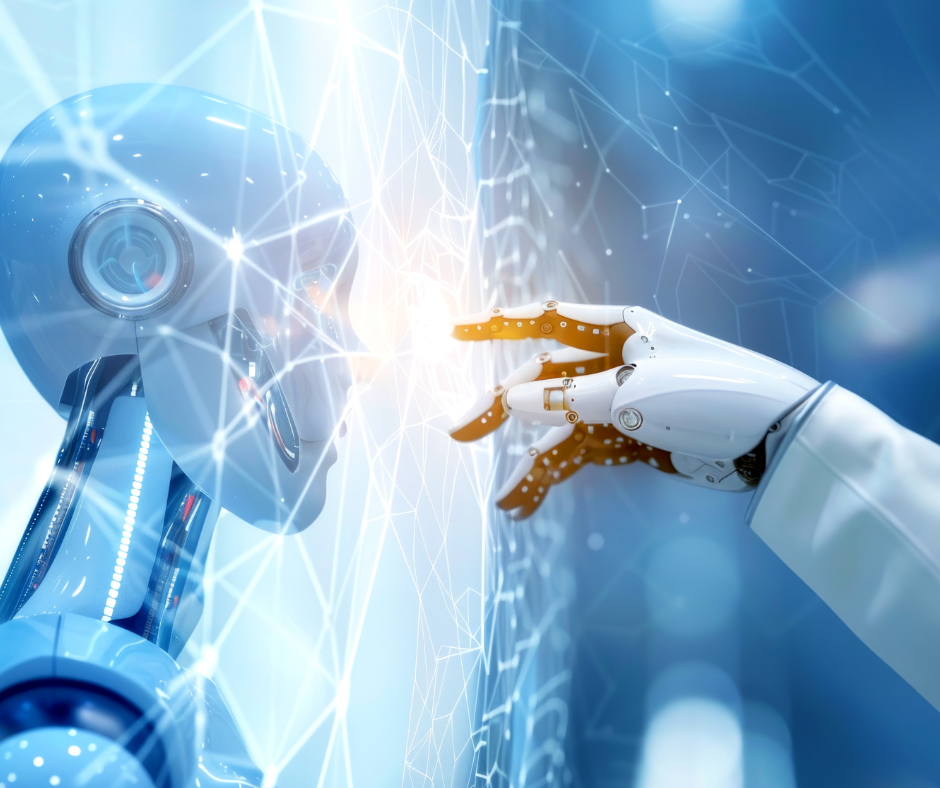
AI in music: let’s talk about it!
The music industry has always been a landscape of evolution. From the first scratch of a pencil on a score to the digital revolution of DAWs, technology has always reshaped our sound. Today, we stand at a new precipice: the rise of Artificial Intelligence.
It raises a question that hits at the very soul of Magnimel Arts: Is AI a creative partner, or a threat to the essence of artistry?
Beyond the Pencil and Eraser
In the “good old days,” writing music was literal—a pencil, a sheet of paper, and the slow, deliberate work of placing every note. Software like Sibelius and MuseScore eventually arrived to speed up the process, but they never did the work for us. They simply saved us a few erasers.
AI is different. It doesn’t just assist; it mimics. By analyzing vast oceans of data, it can generate melodies and chord progressions in seconds. But here is the trick: AI should assist, not substitute. During the pandemic, it seemed everyone became a baker, a chef, or a “musician” through loops and samples. Now, AI is creating a new wave of “overnight artists.” But does speed equal soul?
The Myth of Enhanced Creativity
In theory, AI can break creative blocks by suggesting progressions we might not consider. I’ll be honest—I’ve tried using AI for lyrics and melodies. The results were… “ugly.” The words were superficial; the music felt blah.
While these tools can automate repetitive tasks like mixing and mastering—which is a blessing for independent artists without big budgets—there is a danger of laziness. If we let the machine do the work in hopes of “going viral,” we lose the “if it sounds good, it is good” instinct. Good according to who? A data analyzer?
The Question of Authenticity
Can a machine understand the nuance of a human tear? In my opinion: No.
AI is a mimic. It collects data from human artists and rearranges it. While some argue this is no different from being “inspired” by listening to music, I believe the difference is vulnerability. Human music is a linear waterfall of personal experience. AI is a circle of existing data.
The Risk of a Homogenized World
If we rely on algorithms that tell us what “most people like,” we risk a great homogenization. Innovation happens when schemes are broken, not when they are repeated. If AI-generated music becomes the norm, we risk losing the rich, diverse tapestry that defines the musical landscape.
Collaboration Over Competition
I am not a luddite. I welcome technology that trains me to be better. If AI can help me understand a complex mix, I embrace it. But I feel a great gratification when I finish a piece myself. Where is the joy if a machine does the work? It wouldn’t feel like my creation.
To me, the future of music lies in emphasizing what makes us uniquely human: emotion, storytelling, and vulnerability. These are the differentiators. In a landscape populated by “bites and streams,” the human touch will become the ultimate luxury.
Perhaps the AI revolution will simply make the gap more evident—separating those who use tools to enhance their skill from those who use tools to hide a lack of it.
Enjoyed this look inside the studio? If you’d like to join me as I continue this musical journey, consider subscribing to the Lion’s Journal. You’ll get these stories and new music releases delivered directly to your inbox.